
No products in the cart.
A PSA 10 first-edition Base Set Charizard sold for US$550,000 at auction in December 2025. A common Pidgey from the same set is worth about 50 cents. The difference between those two numbers comes down to five things: which card it is, what condition it is in, whether it has been graded, which edition it is, and what someone is willing to pay for it right now. This guide walks through each of those factors so you can work out what your cards are worth before you sell them.
Most people who want to know the value of their Pokémon cards are in one of two situations. Either they have found a childhood collection in a cupboard and want to know if anything in it is worth selling, or they have been collecting actively and want to understand what the market will pay for specific cards in 2026.
Both situations require the same process. Card valuation is not guesswork, and it is not as simple as searching the card name and taking the first number that appears on screen. Pricing depends on several factors that interact with each other, and getting it wrong in either direction costs money. Overvaluing a card means it sits unsold. Undervaluing it means leaving money on the table.
This guide covers each step in order, using publicly verifiable data and the same methods that dealers, collectors and grading houses use to assess cards.
Step 1: Identify the exact card
Getting this identification wrong is the most common mistake in card valuation. A card that appears to be a 1999 Base Set holo may turn out to be a later reprint, a different language version, or a non-holographic variant. Each of those differences changes the value substantially.
Step 2: Check what the card has sold for recently
Once you know exactly which card you have, the next step is to find out what people have paid for it. The key word is "paid." Active listings on eBay, TCGPlayer or Facebook Marketplace show what sellers are asking. Completed sales show what buyers were willing to spend. These are often very different numbers.
eBay’s Sold Items filter is the most accessible tool for this. Search for the card name, set and card number, then filter to "Sold Items" and sort by most recent. This shows completed transactions with real prices. A few guidelines make the data more useful:
TCGPlayer is another useful reference, particularly for modern sets where sales volume is high. For Australian sellers, keep in mind that TCGPlayer prices are in US dollars and the platform is less commonly used for transactions within Australia.
Step 3: Assess condition with a critical eye
Condition is where most people get the valuation wrong, because it requires a critical eye rather than optimism. A card that looks fine at arm’s length may have whitening on the edges, a faint crease, or off-centre printing that drops its grade, and its value, significantly.
For raw (ungraded) cards, the market uses a general condition scale. The value percentages below are approximate and vary by card, but they give a useful sense of how condition affects pricing:
| Condition | What it means | Effect on value |
|---|---|---|
| Mint / Near Mint | No visible wear. Clean edges, sharp corners, no whitening, no scratches on the holo surface. | Commands full raw value. Likely to grade PSA 8 or above. |
| Lightly Played | Minor edge wear, small amount of whitening, faint surface scratches visible at an angle. | Typically 50-70% of near-mint value. May grade PSA 5-7. |
| Moderately Played | Obvious wear. Creases, noticeable whitening, surface damage. | Roughly 20-40% of near-mint value. Unlikely to grade above PSA 4-5. |
| Heavily Played | Significant damage. Bends, tears, water damage, heavy creasing. | Value is minimal for most cards. Only rare vintage cards retain meaningful value in this condition. |
This is a heading.
The condition scale is not a formality. A near-mint Base Set holo Blastoise might sell for $150 to $200 raw. The same card in lightly played condition might sell for $60 to $80. In heavily played condition, $20 to $30. The card is the same. The condition is doing all the work.
Step 4: Understand the difference between raw and graded values
A graded card is one that has been submitted to a professional grading service, assessed for condition, and sealed in a tamper-proof case (called a slab) with a grade assigned on a scale of 1 to 10. The two most widely recognised services are PSA (Professional Sports Authenticator) and Beckett (BGS).
Grading removes the guesswork from condition assessment. A PSA 10 (Gem Mint) card has been independently verified as being in the highest possible condition. This verification makes the card easier to sell, easier to price, and typically more valuable than the same card in raw near-mint condition.
The difference between grades is not linear. For modern cards, a PSA 10 typically sells for two to five times the raw value. For vintage cards, the multiplier is steeper: a PSA 10 of a desirable WotC-era holo can be worth five to ten times the raw near-mint value, or more, depending on how many PSA 10 copies exist (the population count). This is why collectors check population reports on PSA’s website before submitting cards for grading. If a card already has thousands of PSA 10 copies, the premium for grading may not justify the cost.
Grading costs and turnaround times vary, and PSA has raised prices twice since September 2025. As of February 2026, the most affordable route is PSA’s Value Bulk tier at US$25 per card, though this requires a minimum of 20 cards and a Collectors Club membership. Individual submissions start at higher tiers. Turnaround at the Value Bulk level is approximately 95 business days. Australian middleman services such as PokeBox, Slabd and Cherry Collectables handle the shipping and customs process for a fee, typically running from around A$40 to A$60 per card all-in depending on the provider and service level. These are national services available to collectors across Australia. The general guideline among collectors is that grading is worth considering if the raw card is worth A$75 or more and is in condition likely to score a PSA 9 or 10.
Vintage cards vs modern cards: where the value sits
The Pokémon TCG has been in print since 1996 in Japan. The English version launched in January 1999. Cards from the Wizards of the Coast era (1999 to 2003 in English) are considered vintage, and this is where the highest values tend to concentrate. Base Set, Jungle, Fossil, Team Rocket and the original Gym sets from this period are the most traded vintage sets, with first-edition holographic rares from Base Set sitting at the top of the market.
Modern cards, from the Sun & Moon era onward, carry value in a different way. The market for modern cards is driven by alternate-art illustrations, special illustration rares (SIRs) and chase cards from popular sets. The Charizard ex SIR from Obsidian Flames, for instance, has traded above $300 raw and significantly more at PSA 10. Some of the most sought-after modern SIRs push above $500 in raw near-mint condition. The difference is that modern cards exist in much larger populations. Print runs are far higher than they were in 1999, which means the scarcity premium that drives vintage prices is generally absent.
For someone valuing a mixed collection, the practical implication is clear: spend the most time identifying and assessing the vintage cards and any modern cards with alternate-art or special illustration treatments. Commons and bulk from any era are worth very little individually but can be sold as lots.
Common valuation mistakes
A few errors come up repeatedly when people try to value their own cards:
Valuation factors specific to Sydney
The Pokémon card market is global, and most pricing data comes from US-based platforms where prices are listed in USD. For Sydney sellers, a few local factors affect how that data translates into real value:
Currency is the most obvious consideration. A card that sells for US$100 on eBay.com represents roughly A$155 at current exchange rates. When checking sold listings, make sure you know whether you are looking at eBay Australia (prices in AUD) or eBay US (prices in USD). Mixing them up skews the entire valuation.
Supply and demand also play out differently in a smaller market. Graded slab inventory from local sellers is thinner than what is available online, which can mean local prices sit slightly above or below international averages depending on what is in stock. In-person buyers and sellers in Sydney avoid eBay’s roughly 13 per cent final value fee and the cost and risk of shipping, which changes the economics of a transaction meaningfully. On a $500 card, eBay fees alone represent about $65.
For sellers who are unsure about their valuations, an in-person assessment at a specialist card shop provides something that online research cannot: someone experienced handling and grading thousands of cards looking at the physical card in hand. Whitening, surface scratches and centering issues that are difficult to assess from photos become immediately apparent in person.
Getting an in-person valuation in Sydney
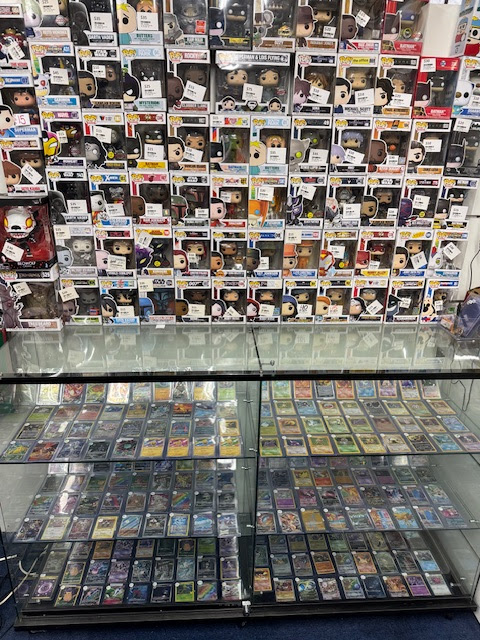
Northern Beaches Pokémon at Cash Traders Northside in Dee Why buys and sells Pokémon singles, graded slabs, sealed product and full collections. Valuations are based on confirmed recent sales from publicly available platforms, and the shop is open to showing the data behind any offer.
For anyone bringing cards in for assessment, a small amount of preparation makes the process faster and the valuation more accurate:
- Sort cards by set if possible. Keeping Base Set cards separate from modern cards helps the assessment move through the collection efficiently.
- Pull out any cards you believe may be valuable. Holographic rares, first-edition stamps, alternate-art cards and anything graded should be set aside from bulk.
- Store cards in top loaders or sleeves. Unprotected cards in a shoebox are more likely to have picked up damage that reduces their grade and value.
- Be prepared for the reality that shop buy prices sit below open-market resale value. A shop purchasing for resale needs to account for overheads and the risk that prices move between buying and selling. The trade-off is immediacy: no listing fees, no waiting for a buyer, no shipping.
The bottom line
Valuing Pokémon cards is a skill, not a mystery. It follows a clear process: identify the exact card, check recent sold prices from completed transactions, assess condition with a critical eye rather than hope, and understand whether grading would add enough value to justify the cost and wait time.
For sellers in Sydney, the additional step of converting between USD and AUD and accounting for local supply dynamics can shift valuations by 10 to 20 per cent in either direction. Getting an in-person assessment from a specialist dealer remains the most reliable way to confirm what online research suggests, particularly for vintage cards and high-value graded slabs where small condition differences translate to large price differences.
FAQ
Identify the exact card using its set symbol, card number, edition and rarity, then search for completed sales on eBay (filtered to Sold Items) from the past 30 to 60 days. Match the condition and language of your card to the sold listings as closely as possible. Active listings do not reflect market value, only completed sales do.
Grading is generally worth considering if the raw card is valued at A$75 or more and is in condition likely to score a PSA 9 or 10. As of February 2026, PSA’s most affordable tier (Value Bulk) costs US$25 per card but requires a minimum of 20 cards and a Collectors Club membership. Individual submissions start higher. Australian middleman services handle shipping and customs for around A$40 to A$60 per card all-in. Check the PSA population report first. If thousands of copies already exist at PSA 10, the grading premium may not justify the cost.
Vintage cards from the Wizards of the Coast era (1999 to 2003) tend to carry the highest values due to lower print runs and collector nostalgia. First-edition holographic rares from Base Set are the most valuable Pokémon cards on the market. Modern cards can also be valuable, particularly alternate-art illustrations and special illustration rares, though they exist in much larger populations.
Northern Beaches Pokémon at Cash Traders Northside in Dee Why provides in-person valuations for Pokémon singles, graded slabs and full collections. Valuations are based on confirmed recent sales data from publicly available platforms. The shop is open 7 days a week at 687 Pittwater Road, Dee Why NSW 2099.
Card shops typically offer below open-market resale price because they need to account for overheads and the risk that a card’s value changes before it resells. The trade-off is immediacy, no platform fees (eBay charges roughly 13 per cent in Australia), and no shipping risk. Whether the convenience justifies the difference depends on the seller’s circumstances.